 5240 Spring Mountain Road B
 (702) 368-2886
 Find Us
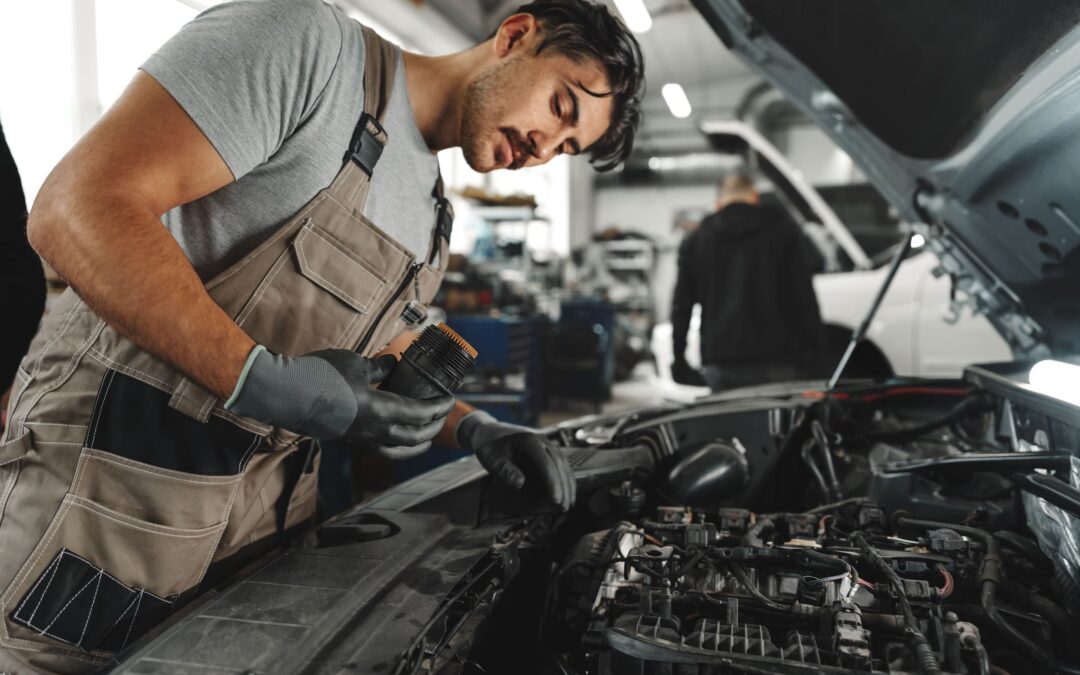
Land Rover’s own technical bulletins blame a worn isolator for the clattering, knocking rattle some supercharged V6 and V8 engines make. It can sound like marbles in a coffee can, and it’s easiest to hear at idle. That Range Rover supercharger noise won’t fix itself. With the holiday runs on I-15 coming, have Paladin Automotive in Las Vegas hear it now rather than listening to it yourself all the way to Barstow.
Quick Summary: Key Takeaways
- The rattle has a name: torsional isolator wear.
- It’s easiest to hear at idle: a warm engine at a stoplight leaves the clatter nothing to hide behind.
- An excessive whine is different: that points at the supercharger itself, and so do a rough pulley or damaged rotors.
- Land Rover published the test: belt off, engine run, pulley turned by hand.
- Book before the holiday miles: a long I-15 run is the wrong time to find out what’s really rattling.
The Supercharger Isolator Absorbs the Drive’s Pulses
The isolator (Land Rover sells it as a supercharger spring isolator kit) is a spring-loaded piece in the supercharger’s input that soaks up the jolts between the belt-driven pulley and the rotors. When the spring or its support shaft wears, the drive picks up backlash, and the loose parts knock against each other. That’s your coffee can.
The rattle is easiest to hear at a warm idle at any Las Vegas red light, when the cabin is quiet and the engine isn’t covering anything up.
→ Land Rover repair in Las Vegas
Supercharger Noise From the Isolator Sounds Different From a Whine
An isolator rattle is a loose, metallic clatter. Other sounds have other suspects. An excessive whine points at the supercharger itself, and a rhythmic tick that stays with the engine at every speed deserves a proper diagnosis before anyone blames the supercharger.
A chirp on a cold start is different again, and that one often lives in the engine’s accessory belt or its tensioner instead. It’s a separate belt. That’s why Land Rover’s test can run the engine with the supercharger belt off.
→ serpentine belt replacement for Land Rovers
Land Rover’s Own Bulletin Spells Out the Diagnosis
Land Rover has documented this exact fault. In Technical Bulletin LTB00669NAS1, issued in June 2014 and filed with NHTSA, Jaguar Land Rover described a clattering, knock or rattle noise on 2014 Range Rover, Range Rover Sport and LR4 models with the 3.0L supercharged V6. It pointed to wear in the torsional isolator or its spring support shaft, which lets excess backlash into the supercharger drive and turns every pulse from the belt into a knock. A separate bulletin covers the same cause on the supercharged 5.0L V8.
The test is simple. Take the supercharger drive belt off, run the engine to prove the noise is gone, then turn the supercharger pulley by hand.
A clunk means isolator. So does free play before the rotors start turning. A pulley that sticks or feels rough, damaged rotors, or a customer complaint of excessive whine means a full supercharger. The bulletin doesn’t cover warning lights, so if the dash light is on as well, read the stored codes before any of it.
→ check engine light diagnostics
The Isolator Is a Small Part and a Big Labor Job
The kit is small. The labor isn’t. Land Rover’s 2016 bulletin for the 5.0L V8 lists 4.6 hours to renew the isolator on a 2013-and-later Range Rover or 2014-and-later Range Rover Sport. The V6 bulletin lists 4.1 hours on the Range Rover Sport and 4.5 on the Range Rover.
That’s why the belt-off test matters before anyone quotes a price, because the same rattle on the same engine can end in a spring kit or a complete supercharger. Confirm the isolator first, and you avoid paying for a supercharger the car didn’t need.
→ European engine repair in Las Vegas
Get the Rattle Checked Before the Holiday Run on I-15
The holidays put a lot of Las Vegas Range Rovers on I-15, and the run south past Primm and up toward Mountain Pass keeps a supercharged engine working for hours. Find out before Baker.
Paladin Automotive has worked on European cars in Las Vegas since 2009, and its ASE-certified technicians handle Land Rover engine diagnostics with OEM-quality parts. Owners come in from Henderson and Summerlin too.
→ European auto repair for Summerlin drivers
Frequently Asked Questions
Q: Is it safe to drive a Range Rover with supercharger rattle?
A: Around town, it usually is. An isolator rattle by itself rarely counts as an emergency. Get it diagnosed before a long highway drive, though, because a whine or a rough-turning pulley points to a bigger supercharger problem that shouldn’t wait.
Q: Why does my Range Rover rattle at idle?
A: On supercharged Land Rovers, a worn torsional isolator lets slack into the supercharger drive, and the clatter is easiest to hear with the engine idling at a light. Land Rover’s bulletin pins it down in two steps: run the engine with the supercharger drive belt off, then turn the pulley by hand and feel for a clunk or free play.
Q: How long does a supercharger isolator replacement take?
A: Across the V6 and V8 bulletins, Land Rover’s listed labor times run from 4.0 to 4.6 hours on Range Rover and Range Rover Sport models. The 2014 LR4 V6 takes 2.9.
Q: Does supercharger whine mean the isolator is bad?
A: Not usually. Land Rover’s own guidance treats excessive whine, a rough pulley or damaged rotors as reasons to replace the supercharger assembly, while a clunk or free play in the pulley points to the isolator.
Book a Supercharger Noise Diagnosis in Las Vegas
Have it diagnosed while it’s still only a rattle. Arrive with the engine warm. From Summerlin or Henderson the drive ends at 5240 Spring Mountain Road B, Las Vegas, NV 89146. Use the scheduling form at paladinautomotivelasvegas.com before you load up for the holidays.