 5240 Spring Mountain Road B
 (702) 368-2886
 Find Us
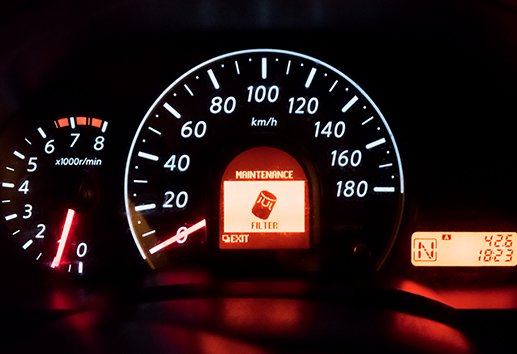
Check Engine Light Repair & Maintenance Services in Las Vegas
Your Check Engine Light in Las Vegas Is a Clue, Not a Diagnosis
The instinct is to wait and see whether the light goes off by itself. Sometimes it does. That is exactly the trap, because a light going out does not mean the fault went away — it means the computer stopped seeing it on this drive cycle. It could be something as minor as a loose gas cap, but it could also be a more serious issue that could reduce your fuel economy, increase emissions, and/or lead to costly repairs later. On an Audi or a BMW, the distance between those two outcomes is thousands of dollars.
Quick Takeaways
- A code names a circuit, not a part: P0171 says the bank ran lean. It does not say the oxygen sensor failed, and replacing one on that basis is how people pay twice.
- Generic scanners miss the European half: A parts-store reader pulls generic emissions codes and skips the manufacturer-specific ones, which on a BMW or Audi is where the real fault usually lives.
- Steady versus flashing: A steady light means get it read this week, while a flashing light means a live misfire dumping raw fuel into the catalytic converter — pull over.
- Nevada makes it your problem: In the urban Las Vegas Valley, an illuminated check engine lamp fails the annual emissions test on any 1996-or-newer light-duty vehicle.
A Code Names a Circuit, Not a Broken Part
A fault code describes a condition the computer measured. That is all it does. P0300 is a random misfire — it could be coils, plugs, an injector, a vacuum leak or low compression, and the code cannot tell any of those apart. Real diagnosis starts after the scan: freeze-frame data from the moment the fault set, fuel trim values, live sensor readings, and a test that proves which part actually failed. Anyone can read a code. Reading the car takes tools and time.
Parts-Store Scanners Miss the Codes That Matter on European Cars
Generic OBD-II gives every manufacturer one shared list of emissions codes, and European carmakers keep most of the useful information outside it. A BMW logs faults in the engine module, the transmission module and a dozen others under BMW’s own numbering. Audi, VW and Mercedes do the same. A generic reader queries one module and one code set, which is how a shop hands your car back with “no codes found” while it keeps stumbling at the light. Factory-level tools read every module and display the manufacturer’s own fault text. Different job.
Pending Codes Show Up Before the Light Does
Most emissions monitors have to see a fault twice before they turn the lamp on, and that first occurrence is stored as a pending code. That is the cheap window. Pull pending codes and you can catch an oxygen sensor going lazy or an evaporative purge valve starting to seep weeks before anything appears on the dash. Ask for them.
Five Faults Cause Most European Check Engine Lights
Almost everything that comes through the door traces back to five systems.
- Oxygen sensors: they slow down before they fail outright, skewing fuel trim for months, and the wiring near a hot exhaust manifold does not love valley summers.
- Catalytic converter: usually a symptom, not a cause. A long-running misfire or an oil burner kills the converter.
- Coils and spark plugs: the top misfire source on direct-injection BMW, Audi and VW engines, and cheap to fix before the converter pays for it.
- Evaporative emissions: a loose or cracked fuel cap, a leaking purge valve, or a split hose. Small-leak codes are common and they fail you at the test.
- Mass airflow sensor: desert dust and oiled aftermarket filters foul the sensing element, and the engine runs rich or lean depending on which way the reading drifts.
None is a mystery. Each one is a test away from confirmed.
Nevada Emissions Testing Fails a Car With the Light On
Gasoline vehicles based in the urban Las Vegas Valley need an emissions test every year, and on anything 1996 or newer that test reads your OBD system instead of the tailpipe. Nevada DMV lists an illuminated check engine lamp as a failure on 1996-and-newer light-duty vehicles, with the program reaching back to 1968 models. New vehicles skip their first three registrations; hybrids are exempt for five model years. Treat the light as a deadline. Your renewal date sets it.
→ ignition coil and spark plug service
More questions about codes and intervals live in one place.


Luxury Vehicles We Service
AUDI

Bentley

BMW

Ferrari
Land Rover

Maserati

Mercedes Benz

Porsche

Rolls Royce
Volkswagen

Frequently Asked Questions
Is it safe to drive with the check engine light on?
A steady light usually means yes, briefly. Get it read this week. A flashing light means no. That is a live misfire pushing unburned fuel into the catalytic converter, and it can destroy a converter in a few miles. Nevada's DMV says the same thing — pull over and stop driving right away.
Can a loose gas cap turn on the check engine light?
Yes, and it is one of the most common causes there is, because the evaporative system pressure-tests itself and a cap that is not sealing reads as a leak. Tighten it and the light may clear after several drive cycles. If it comes back, the leak is elsewhere — usually a purge valve or a cracked hose.
Why did the parts-store scanner say no codes on my Audi?
Because it only reads generic OBD-II emissions codes, from one module. Audi stores most fault information under its own manufacturer-specific numbering, spread across a dozen control units that a generic tool never queries at all. Factory-level tools do. That is the whole difference.
Will my car pass a Nevada emissions test with the check engine light on?
No. On 1996-and-newer light-duty vehicles in the urban Las Vegas Valley, the test reads the OBD system and an illuminated lamp is a failure. The DMV still recommends testing anyway, since a failing test is the first step in the waiver process if repairs turn out to be costly.
How long after a repair before the check engine light stays off?
Longer than most people expect. The OBD system has to finish its readiness monitors, which takes up to a week of driving under varying conditions after a repair or a battery disconnect. Until they finish, a test comes back "Rejected" — not the same as failed. Give it the week.
Get the Code Read at Paladin Automotive
Bring the car in with the light on and leave the code clearing to us — the stored data is what makes the diagnosis possible. Paladin Automotive is a locally owned European specialist at 5240 Spring Mountain Road B, Las Vegas, NV 89146, with ASE-certified technicians and factory-level scan tools for Audi, BMW, Mercedes-Benz, Porsche and Volkswagen. Open Monday through Friday, 7:30 AM to 5:00 PM, and Saturday 8:00 AM to 2:00 PM. Closed Sunday.
Let's get your vehicle back to peak
performance. Tell us what your car
needs-we'll take care of the rest.
- ASE-Certified European Specialists
- Honest Estimates & Transparent Service